I love to cook. Actually, I love to bake because I have a huge sweet tooth, but I enjoy cooking as well.
Enjoy!
I love to cook. Actually, I love to bake because I have a huge sweet tooth, but I enjoy cooking as well.
Enjoy!
Last week Matt and I were lucky to be on board the Lindblad Expeditions/National Geographic Endeavour for a week-long cruise around the eastern Galapagos Islands. We found out late Thursday that we were approved for the trip and set off early Saturday morning to San Cristobal to meet up with the ship. The 2 1/2 boat ride was rough and despite dramamine and my handy pressure point wristbands, I learned a new meaning for walk of shame – walking off the boat with a puke bag in hand. Thankfully, I had prescription scopolamine patches left behind by some friends and slapped one on as soon as we got on board. We were ready to cruise!
We had only been on one cruise before – Alaska’s inside passage on a ginormous ship – and to say it was not my favorite vacation is an understatement. In addition to getting seasick, I did not enjoy the canned feeling of a sedentary voyage that catered to middle America tastes. What a difference this experience was! The fact that it was not a cruise but an “expedition” set the tone. Our schedule was packed with hikes, snorkeling trips, kayak outings and the like and led by naturalists who had a passion for the wildlife and setting. The passengers were primarily adventurous, active folks who were eager to learn about the Galapagos and see as much as possible. That said, we still had ample meals and time to relax. Sunset at the equator is 6 pm, so we were always back on board relatively early, particularly given that the ship doesn’t dock anywhere but instead uses zodiacs (hard bottomed rubber boats) to transport us between the ship and shore (or kayak or snorkeling spot). Getting between the ship and the zodiac is not always an easy feat in choppy waters. On the pier in San Cristobal some of our fellow passengers quickly set up a pool – $20 per person with the pot going to the first person unintentionally to go overboard during the transfer. Never one to pass up a gambling opportunity, we were in. Surprisingly, while there were some close calls, no one went overboard.
The magic of the Galapagos is its wildlife. While neither Matt nor I are birders, the birds proved to be fascinating on this trip. The first treat was seeing the waved albatross engaged in their mating dance on Española Island. This is not the normal mating season, and we saw some unusual animal activity on the trip, which our guides attributed to El Niño.
Albatross mate for life and each season lay one egg on open ground. Both partners incubate the egg and caring for it includes rolling it around. We didn’t see that spectacle, though I was hoping.
Next up were the Nazca Boobies. These are the largest of the 3 booby species found on the islands. The juveniles spend considerable time practicing to fly before they learn. They also are heavier than the adults (typical teens) and have to slim down before they can get airborn.
It is a bit hard to tell mating behavior versus fighting, but these two were having a turf war, much to the interest of their neighbors.
Not to be outdone, the Red Footed Boobies are pretty spectacular and should be called the Multicolored Beak – Red Footed Boobies.
Of course, the ubiquitous Blue Footed Boobies were also spotted.
We didn’t just bird watch. Matt’s favorite part of any trip is the snorkeling and we went on all 6 of the snorkeling excursions offered.
Unfortunately, on our second outing we got water in the camera. After trying to dry it out for a day we plugged it in to charge the battery and returned to our cabin a couple of hours later to find the cord melted into the camera. We were relieved we didn’t burn down the ship. We especially wished we had the camera for our snorkeling outing to Bartolomé. Often cited as the best of the islands, it did not disappoint. We saw just about every type of fish, coral, and sea creature (with the exception of sea turtles, penguins or sharks) that we have ever seen in the Galapagos and the structure around which we swam was fantastic. In the picture below, we snorkeled from the beach on the right to the end of the point with the peak.
We had a human-focused excursion to Post Office Bay on the island of Floreana where we continued a mail swapping tradition that dates back at least to 1793. The guides open the mail barrel and read out the addresses on the postcards inside. If one is close to your home, you take the postcard and deliver it in person. We took a few from the Milwaukee area although the recipients will have to wait until next year for their special delivery.
Back on the zodiac, a naturalist spotted some penguins so we zipped over to take a closer look.
Other adventures included searching for elusive land iguanas on Cerro Dragon on Santa Cruz (our home island – Matt actually went to school to give the tour for the passengers and I went home and did a load of laundry the first day we were there).
We saw the cruel side of nature: the kleptoparasitic frigatebirds that steal food from other birds by attacking them and shaking them by the tail and starving sea lion babies whose mothers likely were eaten by sharks.
We learned to look past natural camouflage.
And to enjoy the flamboyant.
There was something great to see every time we looked.
A trip to remember and a new appreciation for cruises!
Yesterday was the grand opening of the Tomás de Berlanga Open Air Library! In a few short months, we managed to build a new dedicated space for the student library, secure amazing donations of new and gently used books, cull hundreds of unsuitable books and label and index the remaining 900 books for the student library.
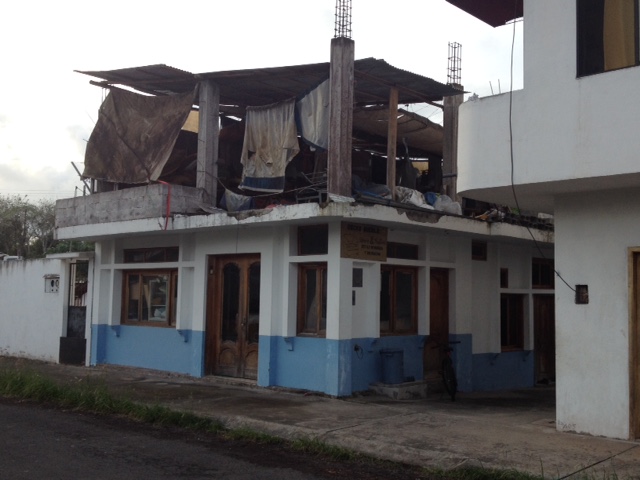
We went from this:
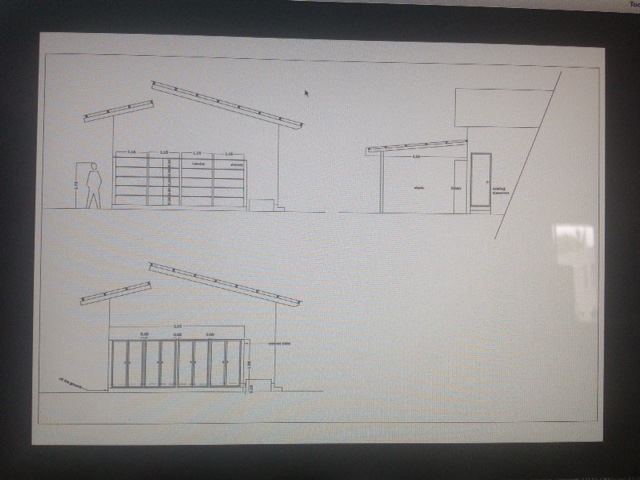
Conceptualized this:
To this:
The students were patiently awaiting the new library and getting their hands on the newly donated books. Finally, we were ready to open the English section of the library. (I need to finish sorting and labeling the Spanish books, but they are few in number and in even worse shape than the English ones were.)
I started checking out books right after we opened and had a steady stream of patrons the rest of the day. It was amazing! Students were coming during their recess and, I later realized, slipping out of class to come for a book. There was a lot of borrower’s remorse and requests to change books – I think the kids were so overwhelmed with the great new options that they didn’t know where to start. The cool, donated book marks were a big hit and the kids were amazed to find out they could keep them. We also have a lot of education to do about library procedures: starting with checking out books and not just taking them. As we have no computer for the library, the check out system is old school. It took me several nights to fill out a form for each student – they each have 4 names here and it is not always consistent which ones they use.
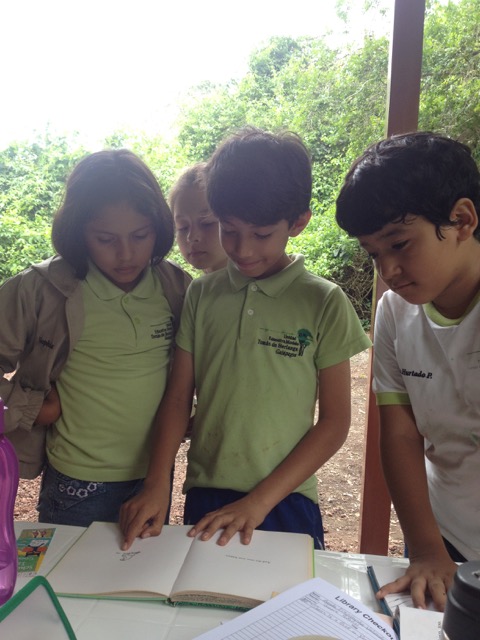
The best part of the day was when a few 5th graders came to the library during recess. One boy, Matias, picked The Giving Tree to check out and I told him it was one of my favorite books. Other kids chimed in and Matias started reading it at the checkout table. I asked if he wanted to read it aloud and he happily agreed. The other students gathered around and listened (shushing one boy who started reading his book aloud) and we all enjoyed the first story hour at the open air library.
A big THANK YOU to everyone who helped on this project, including
WANT TO HELP? WE NEED BOOKS!
Book Guidelines:
For more information about the school, visit its Facebook page https://www.facebook.com/tdberlanga or its website at http://www.scalesia.org/tomas-de-berlanga-school
When I wrote my initial blog post about my quest to create a better library at Matt’s school https://kerryedwyer.com/2015/07/10/one-book-at-a-time/, I thought that in addition to proving to family and friends that I don’t just go to the beach, it might spur some folks to collect and donate books to the school. Shameless, I know, but many of you have started doing just that. Previously, as I was researching the library project, my librarian cousin Patty suggested that I join the ALA Think Tank Facebook page so I could pose questions or might see other questions similar to mine. I joined the page and subsequently on July 13 posted my blog post on the ALA page with the introductory message:
Hello. I am trying to improve a primitive library at a school on the Galapagos Islands (Ecuador). My husband is the school director and I am the volunteer librarian (no MLIS degree, just a passion for libraries and reading). There are many issues to address, but I am starting with trying to build the collection. Does anyone have any ideas as to how to get books here? I think I can obtain some decent book donations via friends and families, school drives etc., but the cost of shipping and (potentially) taxes makes getting the books here challenging. Are there any organizations that assist with this type of project? If you want to see more, I’m including the link to my blog post about the project. Thanks much!
It was simply a request for information and as librarians are an informing bunch, I soon had 28 comments, all encouraging and many with helpful information. One of the responders, Amy Dahl, also reached out with a FB friend request and message: she wanted to collect books for us and deliver them in person! Amy works in a school library in California and to call her a woman of action is an understatement. Within days she had persuaded her husband Harry that this was an opportunity of a lifetime, obtained permission from her district to miss the opening days of school, and obtained substantial book donations in addition to her own. Amy also provided me with practical advice and encouragement as I continued to struggle with organizing the library’s current collection and advancing the project.
As this excitement was unfolding, Matt was making strides with the library box, or natural library. A school parent who is an architect, Corina Gallardo Nelson, drew up the plans and obtained bids from local tradesmen for the work.
Matt obtained board approval for the project and building commenced about 2 weeks ago. The structure will be attached to an existing classroom building. A concrete base and side walls will hold the wood library “cupboards”. There will be a leveled area in front of the cupboard with a roof overhead – no walls. Once there is funding, there will also be some tables and benches in the area. On-site the project has progressed to the concrete, clearing of the area, and a pile of lava rocks that will be spread to create the floor of the open air library. The carpenter is working on the cupboards and roof in his workshop.
One month to the day after reading my blog post, Amy and Harry landed on the Galapagos with 3 duffle bags – 150 pounds – of books for the Tomás de Berlanga School! Matt and I met them at their hotel and had our first glimpse of the books. Wow! Amy agreed that instead of taking all 500 books to school, we could bring a sampling of about 50 to showcase to the classes we were visiting. She and I could have spent hours selecting those books, but eventually we headed out so we could show them around town and then have dinner. The best part, besides the books, was that they are wonderful, fun people so we had a great time with them.
The next morning after a quick visit to the fish market so they could enjoy watching pelicans and sea lions trying to steal the fresh catch, we headed off to school. What a welcome they received! Matt was giving them a tour of the grounds when a student came up and said “I know who you are: you are Harry and you are Amy. Where are the books?” We assured the student that we would be visiting his classroom later in the day and he could see some of the books.
We began our classroom visits and the students (and teachers) were thrilled. The children oohed and aahed over the books. One of the best overheard remarks was one boy telling another to smell a book and they both inhaled that new book aroma. In the upper level classes, we talked about how a library works, the overall project and proper book care. In the lower classes, Amy showcased some books and read a few stories. The worst part was when we told the children that they couldn’t keep the books because they needed to be labeled and organized. How disappointed the students were!
At the end of the day, Amy and Harry got to enjoy the bus ride home: due to the school’s location slightly outside of town, teachers and students take buses home every night. We visited again Friday night and then took them to the local market on Saturday morning. We all enjoyed a breakfast of delicious empanadas and some live music before they set sail for a week-long cruise.
Matt and I were sad to see them leave – Amy and Harry quickly became friends – but I had 500 books to keep me busy. Matt helped me sort the books by reading level. By Monday night they were all set for my new volunteer, Jessi Pfeltz Mahauad, a friend and parent at the school, to help with labeling. Another session or two and these books will be ready for the new library.
I also continue to sort and label the books at the school. When Amy reviewed the collection, she agreed with me that many of the current books should not be on the shelves. A basic library premise, which seems counterintuitive to some, is that more is not better. A lot of books that no one ever reads on your shelves is not healthy for a library. It only makes it harder for children to find the “good” books and makes the space less inviting. This, in turn, makes children lose interest. As it currently stands, we probably have books to fill no more than 25% of the new library with recently donated books and the decent books currently on the shelves. I have also been researching and planning the library training for teachers and students and a check out system that will ensure the books are returned. Because it is so hard to get books here, it is imperative that students return them because we cannot simply charge a fine and replace the books. So there is still a lot of work to be done to obtain new books, get the library up and running, and promote a culture of reading in the school. But 500 books is a fantastic start!
THANK YOU AMY & HARRY TORRES
and
CAPSTONE PUBLISHERS, BEARPORT PUBLISHING, MRS. NELSON’S BOOK FAIRS, BARNES & NOBLE, EVAN LYONS, MIA & NICHOLAS RODRIGUEZ, RYDER, REID & ROYCE VITALE, GRACE MILLER ELEMENTARY SCHOOL, and JOHN BARNYAK
WANT TO HELP? SPREAD THE WORD OR DONATE TO THE LIBRARY PROJECT!
If you are inspired by Amy and Harry’s generosity and action, please help us! This would be a great project for children who have a benevolent spirit or service requirements for school, church confirmation, Scouts etc. because they could also connect with school children on the Galapagos Islands. Books, funds or both would be greatly appreciated. If you are interesting in helping, please contact me directly, but these initial guidelines may assist you:
For more information about the school, visit its Facebook page (courtesy of Matt) https://www.facebook.com/tdberlanga or its website at http://www.scalesia.org/tomas-de-berlanga-school
Two Tuesdays ago Matt called me with exciting news: he was going to be off school the following Monday, providing his first day off since we arrived here. Originally, his school was required to march in a parade on August 10, in commemoration of Quito Independence Day, but on Tuesday the local government cancelled the parade due to road construction. Subsequently, on Thursday, there was some confusion when the parade was reinstated, but on Friday schools were again deemed exempt. A good thing as we had already paid for our non-refundable hotel on Isabela Island.
Apart from our day trips, this was our first opportunity to explore a new island. From Santa Cruz, the two best options for a weekend getaway are San Cristobal or Isabela. We chose Isabela because the túneles (tunnels) snorkeling trip is supposed to be one of the best of the islands and I miss hiking after living in Cajamarca and Isabela has a volcano hiking trip I wanted to do. Both islands are a 2 -2 1/2 hour ferry ride away. “Ferry” is a term used loosely here:
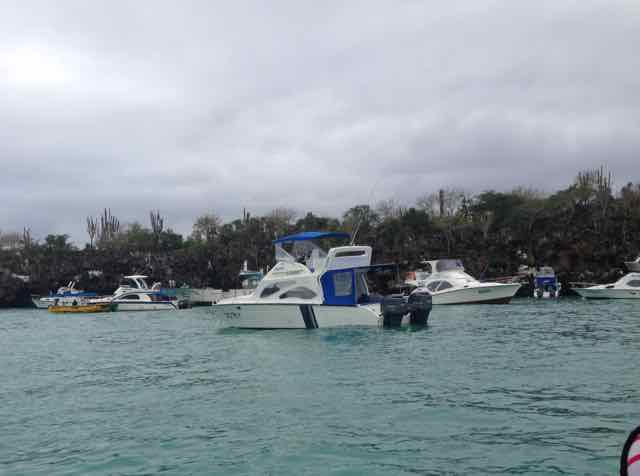
Yep, that was the boat we and 20 other people were going to crash through waves in during a 2 hour ride just at the time that the weather cooled off a bit and the seas got a little rougher. Lucky us. I prepared with my usual dramamine, acupressure sea bands and soothing music and decided an empty stomach was the way to go. We got to the pier about 6:20 am on Saturday, went through the inspection line to ensure we were not bringing anything organically harmful to another island and caught a water taxi (a blatant, 50¢ shake down, increased to $1 on Isabela) to our ferry and settled in for the ride.
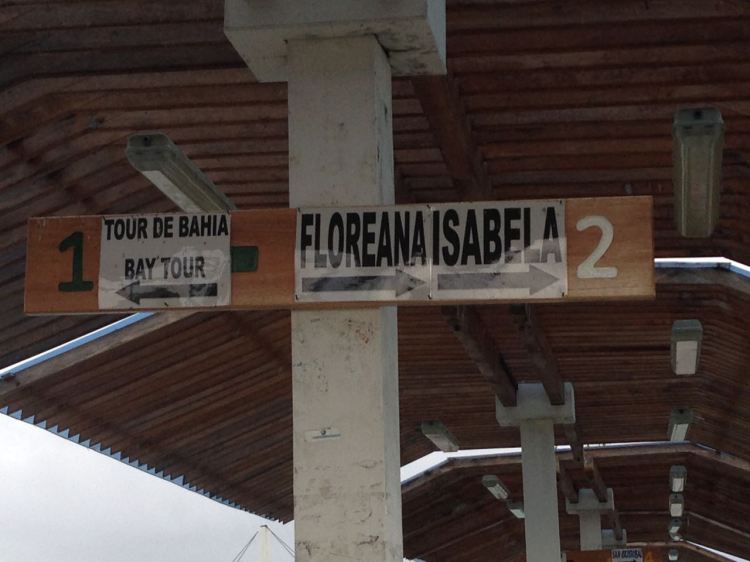
And what a ride it was. Tellingly, they hand out barf bags when you embark. Happily, neither Matt nor I used them, and I decided that pounding through waves is actually easier (not easy, mind you) on my stomach than swaying in the waves, but the ride was bone jarring. Not as bone jarring as what was about to come a few days later on our snorkeling trip, but rough on the back. We had a few pukers on board and I realized that an added incentive to not puking was that after you did so, you got to hold your bag of vomit for the rest of the trip.
As we pulled into Isabela we were treated to penguins zooming alongside the boat. That cheered up everyone after the trying ride.
We dropped off our bags at our hotel, the Red Mangrove Isabela Lodge, and walked into town for some breakfast and to shop for tours. The town is loaded with travel agencies all selling the same 3 or 4 tours. We compared prices at 3 of them and then lined up the volcano hike ($35 per person) for Sunday and the Túneles ($85 per person) for Monday morning before our departure back to Isabela. I had read that to dine at the nicer hotels for dinner you need to make a reservation and order your food in advance, so we headed over to the lovely Iguana Crossing hotel to make a dinner reservation. And guess what: we did, indeed, see 4 iguanas crossing the road right at the edge of the hotel property.
We enjoyed the rest of the day hanging out on the hotel patio and snorkeling at the fabulous Concha de Perla. Located near the pier, you head down a wooden walkway through the mangroves to reach the calm bay. On our walk there, 2 young sea lions were napping on the walkway. What a conundrum! In the Galapagos people are required to stay 6 feet away from the animals. We decided the 6 feet rule had exceptions and gingerly walked over the sea lions. Concha de Perla was crowded but well worth the visit. The water was serene and clear and one can easily swim alongside the reef and admire the coral, anemones and striking red-studded starfish.
It was a good thing we relaxed because we were up early for our 7:15 pick up for our Sierra Negra volcano hike. Confusion ensued when a cabbie picked us up, took us to pick up our box lunch only to realize a few blocks later that we weren’t his passengers. We had even showed him our tickets to confirm we were his passengers. He drove us back to the hotel where eventually another cabbie picked us up and took us to get a different box lunch before driving us up to the highlands of the island. Matt and I agreed that the first box lunch looked better than the second.
While we were told that the tour was 16 km, or 10 miles, no one really pointed out that 10 miles up a volcano is a relatively challenging hike. We were fine because we are accustomed to walking, had proper footwear and after hiking at high altitude in Cajamarca, a hike at 3,000 feet isn’t difficult, but others in our group struggled. The first part was through a lush, verdant area. The mist was heavy and the path, muddy.
We got to the rim of the Sierra Negra crater, the second largest in the world, and couldn’t see a thing. The entire crater was covered in fog. We continued hiking along the rim and then left the verdant area and passed through an in-between scrubby area before eventually arriving in a arid area covered by volcanic rock.
Except under this gorgeous tree – it was wet and misty there.
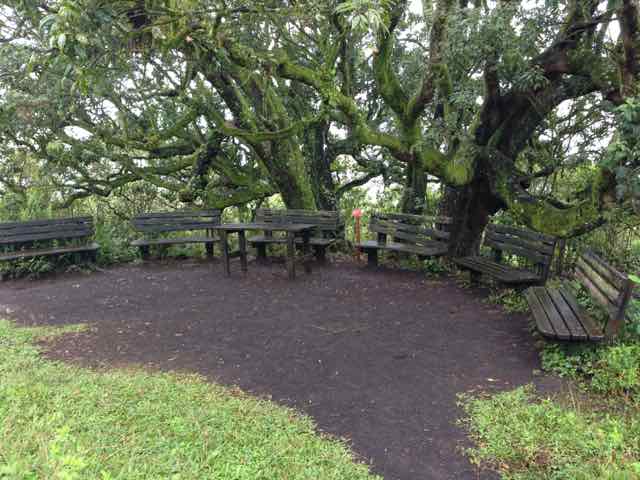
We hit the volcano field. I had no idea that volcanic rock could be so interesting. Seriously. The colors and patterns were just incredible. Because Sierra Negra is an active volcano, there were many furnaces, which were warm to the touch. We crossed several areas of lava from different eruptions and eventually reached a lookout point where we could see the Isabela coast and Fernandina island.
Well, we could see it momentarily before the fog blew in. We ate lunch at the peak and then began the return to the trailhead via the same path.
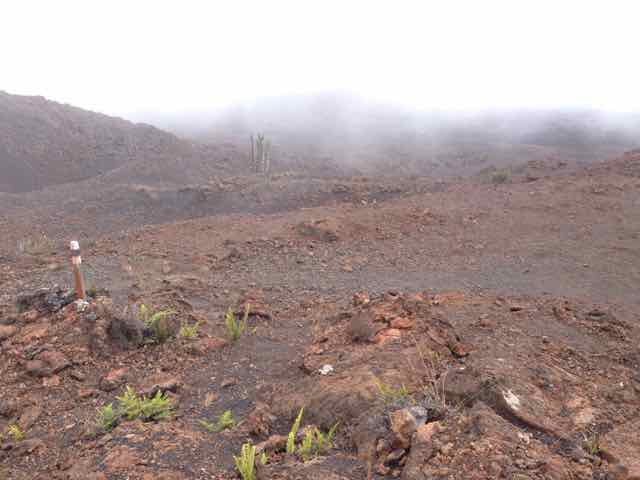
Matt, a Portuguese woman, Maria, and I hightailed it in front of the rest of the group. Our guide told us to keep glancing at the crater as we walked alongside it in case the fog lifted, but it never did. Matt and I were feeling pretty proud of our fast pace until we realized that we were in hiking boots and Maria, who was probably a few years older than us, was keeping up with us in Tevas. In any event, the 3 of us beat the rest of the group back to the beginning and were thankful that there was a cab waiting to take us back to town. We were soaked, muddy and ready to relax for the rest of the afternoon and evening.
The next morning was another early start with the same cabbie confusion. Eventually, the right guy came to get us. Our boat was the Capricorn and we went to the boat’s offices to get our wetsuits and snorkeling gear (Matt and I bring our own snorkel and masks but use the fins the tour companies provide. Wetsuits are on the list for our April visit to the US.). There were 8 other passengers: our new Portuguese friend Maria (who also ended up on the same ferry later in the day), an Italian woman with a French guy, an Ecuadorian family with 2 young children and a high-school aged Colombian boy. We got to the Capricorn and set off. Oh. My. God. Crashing through the waves doesn’t even begin to describe the experience. We were slamming through the waves and there were times the boat was airborne. I was happy that our captain was a cheerful fellow because I figured he didn’t have a death wish. At one point, an enormous wave was coming toward the side of the boat. I think it was big enough to break over us because suddenly our captain turned on a dime and gunned the engine to mount the wave after which we zoomed down the other side. The ocean was our roller coaster.
After 45 minutes of this excitement (and one puker, not us), we approached another boat bobbing in the waves. We stopped and held too. The captains were waiting for the seas to calm enough to continue the journey to the tunnels. They never did and eventually we gave up and went to what was intended to be the second snorkeling stop of the trip, with the assurance that we would try to go the tunnels later.
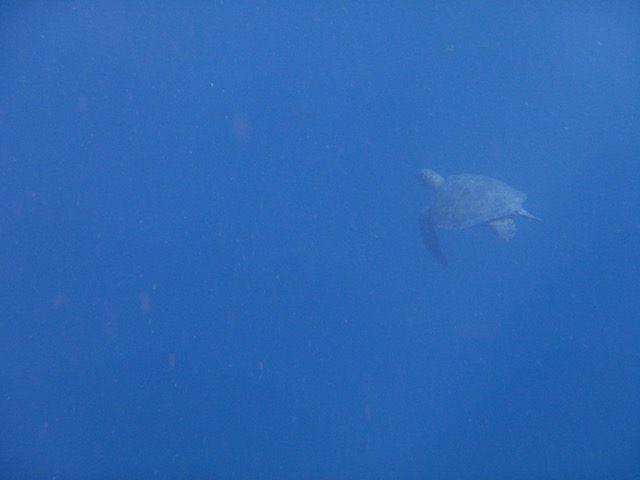
Once in the water it became apparent that only 3 of us knew how to swim. The other 7 passengers ended up clutching their life vests, which were the huge, old-fashioned kind that would certainly keep you afloat but that you couldn’t swim in, or the round life saver. Our head guide had to tow several of the 7 in a line. The younger guide would swim around scouting for stuff to see and then the head guy would tow the crowd over. Because you are supposed to stick with your group, the non-swimmers made the trip a bit less fun for us. We were missing wildlife! I finally starting swimming along with the scout guide who would point out things along the way. In fact, I was the first passenger initially in the water and he immediately took me to see a huge sea turtle. He had me swim down to it and took a picture but unfortunately didn’t send us that one. All the same, it was an incredible trip because our guides made sure we saw tons of sea creatures.
It was the first time we saw seahorses. They were tricky to see as they are not always in their curled shape so sometimes they just look like a bumpy stick.
After a long time in the water, we boarded the boat. The captain assessed the situation and determined that it wasn’t safe to go to the tunnels, so we headed back to Isabela. It worked out fine because we had 3 hours on shore before we had to board the ferry. The ferry ride was even rougher on the way home than on the way to Isabela, but, once again, we were not the pukers on board. They pulled a bait and switch on us and we ended up crammed in a different boat that I did not think was as nice as the Destiny. But we made it home. Isabela was a great trip and is on our list to visit again despite the ferry ride.
A month ago, before our friend Jo returned to England, we went on a snorkeling day trip to Pinzón. While I enjoyed our bird watching trip to North Seymour island, Matt prefers snorkeling to bird watching and this trip was right up his alley because you cannot touch foot on Pinzón without a special permit. Instead this trip entailed 3 snorkeling stops around Pinzón and a visit to a beach on Santa Cruz. First step was taking a water taxi from the Puerto Ayora dock to the boat, the Contagious, which was no-frills compared to the boat from our prior trip. I was glad that I had popped dramamine before we set off as the seas were bumpy.
After about an hour and a half crashing through the waves, we arrived at our first snorkeling destination, a calm bay. Three penguins flopped into the water as we were disembarking but we never saw them afterwards. We jumped off the boat and started swimming. It was like we were in a fish tank. The water was crystal clear and everywhere we looked there were fish and more fish. While many fish were the same types we see at the beach near our house, they were much bigger in the deeper water.
Our guide (whose name escapes me) was a great guy who made sure we saw a lot. He swam with us and pointed out tons of things I wouldn’t have otherwise noticed. He also stirred things up at times…
Next stop was in a deeper area with a stronger current. The fun continued.
I hate snakes. Eels are simply snakes of the water.
The show-off sea lion was more entertaining.
Then Jo called me over. I thought it was to see a sea turtle, which I had yet to see. I was wrong.
Despite my fear, I followed this guy for awhile. Then I decided not to press my luck and went back to viewing tamer animals.
At this stop, Matt and I also had a baby sea lion playfully swim back and forth between us. Happily, we did not see it get eaten by a shark.
Our third snorkeling stop was equally spectacular. As I still hadn’t seen any sea turtles, our guide came and got me when he spotted some. He linked his arm through mine and we swam off after them. Fantastic.
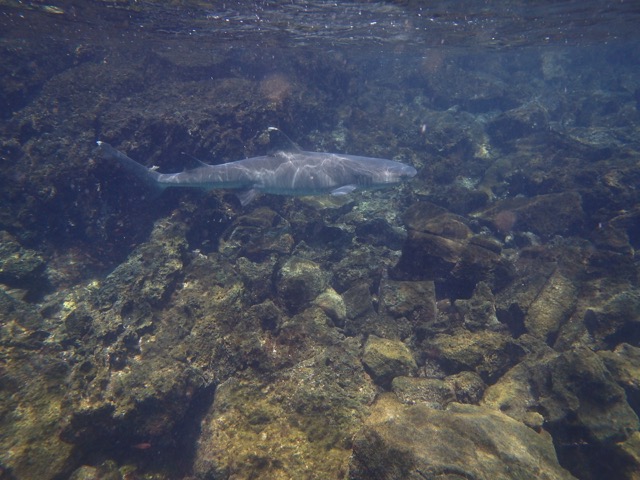
Then it was shark time once again. Our guide woke up the sharks for our viewing enjoyment. Who the heck wakes up sharks?!
Strangely, being in a group and with a guide made me feel safer. Maybe someone else would look tastier than I? Still, I could only watch them for so long. As we continued swimming there was suddenly this big shadow below me in the water. I instinctively glanced over my shoulder to see what large thing was above me just as a realized that I was seeing a HUGE manta ray beneath me. Matt said he reacted the same way. We agreed that its wings were 12-15 feet wide. It appeared to float away. Unbelievable.
On the way back to Santa Cruz, we swung by Daphne to check out the animals on shore. Highlights were the masked booby and fur sea lion.
A fantastic trip and one I recommend to any snorkeler. Thank you Jo Browne for the awesome photos! An underwater camera is on the shopping list for our trip to the US next year…
Matt teased me when I posted “The Wait is Over.” “Really,” he asked, “don’t you think it has just begun?”
Of course, he was right. What was I thinking? I should have known better after living in South America for this long. Nothing comes quickly.
First, it was the wait for our visas. The process is two-fold: we need visas to live in Ecuador and then we need permission to live on the Galapagos as temporary residents. When we were here for Matt’s interview in February, we sat down with a calendar and a school employee and outlined all the steps it would take to get our visas. The school wanted Matt to report to work on April 1 and thought it would be faster if we got our visas in the US. According to our conversation and the calendar, we would be able to go to Chicago sometime the last week of March for our visas. Then we could fly to Quito and wait a couple of days for our Galapagos residency. Perfect, we thought. Wrong, we should have known.
Based on these conversation, the expiration of my visa in Peru and Matt’s Peruvian school happy to have him exit sooner rather than later for cost reasons, we packed up and got out of Peru two weeks after we returned from Ecuador. It was no easy feat, but we got it done and the movers picked up our stuff the day before we flew to the US. Within 2 days of arriving in the US, Matt drove to Madison to get our documents apostilled (certified by the state) and we emailed them off to his new employer. And then we waited.
Oh, we had a good time: hit my family’s annual St. Patrick’s Day party and our friends’ baby shower, visited with family, hung out with friends, shopped for the summer clothes we would need on the island, ate and drank to our hearts’ content. But as the days passed and our visas were no closer to being processed, we abandoned hope that they would get done by the end of March and left for Quito.
We arrived in Quito on March 31 and the wait continued. What the heck was taking so long? To this day, we are not entirely sure why we had so many delays, but after 2 1/2 weeks we finally had them: our visas. Oh and did I mention that we would have to undergo this process annually?
Matt’s teachers had already reported to work and he had been trying to have meetings and guide them from Quito, but he was anxious to get on site before the students arrived on May 4. And I was anxious to move into our new home and get settled. Then we learned that the Galapagos permission needed to be refiled and would take at least another week and a half. Matt raised a fuss (not Matt’s style though it is mine) and we flew to the island on April 26.
But there was a catch. While the law had recently changed and Matt could enter the Galapagos as a “transeúnte” or “transient” and transform that permission to temporary residency, I had to enter as a tourist, which meant that I would have to leave the islands and reenter as a temporary resident. In addition, a tourist can only be on the islands for 90 days in a calendar year, so my time was limited. We flew to the islands with 2 large suitcase and 2 carryons as we had been advised to send our remaining three boxes by air freight, so we had dropped those off a few days before we left.
And then the waiting began. First, the 3 boxes didn’t arrive. For two weeks. Thankfully, I had the foresight to make sure we had a set of sheets and towels in the luggage we took with us. But we had no idea that it would take 2 weeks for the rest of our necessities (like more than 2 pairs of shorts and our snorkeling gear) to arrive. I called daily to check the status and was told that it is “poco complicado” or “a little complicated” because several of the cargo ships that serviced the island sank in the past 6 months, which means that transport space is limited. And our cargo kept getting bumped for more important cargo like food and medicine. One day it actually flew from Quito to Guayaquil (a port town on the mainland), was taken off the plane in Guayaquil and sent back to Quito. But one happy day, our 3 boxes arrived and we promptly went snorkeling.
But on the residency front and our shipment from Peru, nothing. Matt would politely ask about his residency and be given vague responses. Eventually Matt got tired of asking and demanded a specific answer and learned that his paperwork had never been started. What?? This was 5 weeks after we arrived on the island and my time was ticking. Similarly, our shipment was nowhere in sight. First it was delayed leaving Peru, then it was caught up in Guayaquil for 2 weeks and finally, it was stuck in Quito because it was, once again, “poco complicado.”
Finally, 6 weeks after we arrived on the Galapagos, Matt’s residency was approved. Great, we thought and made my plans to leave the island for Quito so my residency application could be started. Within hours of booking my flight to Quito for Sunday, the movers contacted me to advise that the shipment would arrive, you guessed it, on Sunday.
So here I sit in Quito, in exile for an indeterminate amount of time while my residency is processed. I could be 3 days, it could be 2 weeks, no one really knows. The shipment did arrive at home yesterday, but 3 boxes, including our TV and iMac are missing. So the wait, on both fronts, continues.
Furniture shopping in Milwaukee was a pain due to the endless choices. When we were in the market for something, we could spend multiple days running around to furniture stores and department stores as we looked for the right piece and the best price. Matt and I are extremely decisive and hate shopping, so two weekends was about our limit. Furniture shopping on the Galapagos is the opposite: I ran around for the past month trying to find ANY furniture to buy. On Saturday, we committed to making it happen and finally were (mainly) successful.
Our apartment is a spacious one bedroom with an amazing patio that lends to the airy feel of the place.
It is above the doctor’s office/hyperbaric chamber (the doc who lives on site is our landlord), which is handy for telling people as street names aren’t often used here.
We rented it partially furnished; the main furnishings are included but few household items are. “Furnished” means some patio furniture, a double bed (we thought it was going to be a king because that is what was in the apartment when we saw it, so I tri-fold the the king sheets we bought; one makes due on an island!), stove, refrigerator and microwave, kitchen table and chairs, and a sofa, wicker chaise and wicker chair. For a month we used action packers as our doorway table. In casual conversations with our landlord, I managed to finagle additional patio furniture and a computer desk (still working on a chair). But the living room furniture was abysmal. Matt referred to the sofa as an airport sofa, but it was actually less comfortable, disconcertingly grimy and unused.
As we have learned, it is best to bite the bullet and buy what we want to make life more comfortable sooner rather than later. We started asking around about furniture shops. “There’s one on Baltra past the bank,” Matt said one night. We headed over. “This?” It was a crowded shop with random items but there was a sofa and table and some dressers. “No, it can’t be this; she said it had a lot of good stuff. It must be closed.” After stalking the street for a few more days, I concluded that dingy shop was the place. I went in and asked if they had additional furniture or whether furniture could be ordered. The woman looked at me like I was crazy. Okay, I guess a furniture shop is anywhere that sells any random piece of furniture.
I continued to run down leads all over town, but never found what we wanted: a sofa, a cabinet for the doorway, some end tables. Or, I might see an okay sofa, but everything is sold as a set, so we couldn’t buy it unless we wanted the settee, two chairs and coffee table too. The coffee tables here are all small and out of proportion to the furniture. And they have glass tops. Matt still has the scar and PTSD from the exploding glass table in our Lima rental, so we were not interested those.
We did find one shop that had nice, handmade furniture, but it didn’t have the pieces we needed. We asked the woman whether we could have something specific made (at that time we thought we would have a cabinet made that would double as a doorway table and a bar for our glassware and limited booze supply). She seemed confused and kept pointing us to the items they had – a bookshelf or bedside table. Eventually she said we could bring in a drawing and dimensions, but we got the feeling that at the end of the day we would end up with either a bookshelf or bedside table. Ultimately we found this table at a different store and bought it on the spot.
The other option was to go to the “artisanal zone” and have furniture made. We asked questions: where is it, is there a person you recommend, do they have furniture ready to buy? The answers were vague and contradictory: someone would have a name, but we would never get it; someone else said they cater to the tourists but they have some furniture; another person would say the prices are expensive and it takes forever to get something made. We learned that we would need to have something made and then find an upholsterer to make the cushions for it.
Armed with this limited knowledge and the assurance that “any cabbie could take us there” we flagged down a cab late Saturday morning and asked to go to the artisanal area – where the carpenters are. The cabbie seemed to know what we meant and sure enough we headed out of town and turned down the road someone had pointed out to Matt. A few turns later, we stopped. “This guy does good work” our cabbie told us. We were parked on a dirt road in front of a gated lumberyard, complete with a chained, barking dog. What? Where are the shops, the wares, the storefronts? Our cabbie got out with us and called to the woman in the yard who sent out an older man. We chatted, explained that we wanted some furniture and then we all hopped back in the cab to head back to town where we understood the carpenter had a showroom. On the way back we drove through the rest of the “artisan area” – a cluster of probably 15-20 lumberyards and workshops scattered over a several block area, with no finished goods anywhere in sight.
Our cabbie (Angelo) and the carpenter (Rafael) chatted the entire way back to town. Matt and I sat in the back seat, ignored. Wondering what we had gotten ourselves into and sure that Rafael was Angelo’s uncle or other relation, we went with the flow. We ended up a few blocks from our house in front of a nondescript building. Rafael unlocked the gated and let us into the first level of a house where there were some lovely pieces of furniture. A few sofas, bedroom sets, tables etc. Matt and I had already decided on two chairs in addition to a sofa and we liked what Rafael had to offer. Next thing we knew, Angelo was helping us pick out our furniture, asking Rafael about finishes, explaining what we wanted etc. We crossed a courtyard to the first floor of another house where there were some additional pieces. In the end we chose a sofa, two chairs, a coffee table (still small, but with a made-to-order wood top) and a small end table, which is a concept that does not appear to exist here.
More conversation ensued and we all hopped back into the cab to the upholsterer. We stopped here:
Rafael talked to a young guy, a kid really, and then we headed up an unfinished stairway to the work room, mindful of the edge the entire time. Rafael described the cushions we needed and asked what fabrics were available. There were some really hideous ones and a few that could work. To save time we wanted to choose something in stock and not wait for a cargo ship to bring some fabric. Once again, Angelo helped us choose our fabric. Where else does your cabbie pick out fabric with you? We selected one but I told them I didn’t think there was enough for all of the cushions (I’m no seamstress but it was pretty obvious even to me) and eventually the young guy conceded that was the case. More discussion and Angelo inquired whether they had a fabric that would coordinate. Go cabbie Angelo! We found one one from the limited options, placed our order and were assured it will be ready on Wednesday.
On the way to our house, we made arrangements with Angelo to pick us up at 5pm to go pick up the furniture (with the exception of the tables that Rafael needs to make for us). 5 came and went and no Angelo. I called him. ” I’m sorry, I’m busy now.” Okay, on to Plan B. We walked over to Rafael’s store (thankfully Matt remembered where it is) where he and his wife were waiting. We apologized and explained that Angelo didn’t show up and Rafael says they can call someone for us to move the furniture. We talked more, established what we were taking and what he will make and then awkwardly kept waiting for the financial part of the transaction. Eventually we realized that they were politely waiting for us to do that part, because we had talked with Rafael about prices earlier, so we finally just said “okay, we want to pay do you want to pay here or in the other house” and got the deal done.
Rafael flagged down a cab for us and told the kid that he will be making two trips with our stuff. The kid looked reluctant, but helped load the furniture. Here is Matt taking the first load home.
All in all a successful day, even if the furniture looks somewhat like park benches until we get the cushions. Here is hoping they are ready on Wednesday. As an added bonus, our shipment from Peru is supposed to arrive this week, so we can finally get organized and settled.
Last Saturday we took our first day trip. The trip entailed a 35 minute bus ride across our island (Santa Cruz), a 40 minute boat ride to North Seymour island, a 1 1/2 hour guided walk around North Seymour, a boat ride (during which time we were served a delicious lunch) to a beach for snorkeling that is inaccessible by land on Santa Cruz, a boat ride back to port and a bus ride home. We were picked up at 7:30 am and dropped off around 3:30. While the price seemed steep at $168 per person, we compared notes with several of our fellow travelers and found it was an average price for the tour.
While Matt and I were most excited about the snorkeling part of the trip, the walk around North Seymour proved to be the highlight of the day. We disembarked the Alta Mar and headed out with our English speaking guide, Carlos. Our group had 2 Germans, 2 Norwegians, a Colombian and us. English was the common denominator and everyone was quite friendly and fluent. The other group were older Ecuadorians who stuck to themselves and were led by the Spanish-speaking guide.
First spotted animal: the Sally Lightfoot Crab. We didn’t find it too exciting as Santa Cruz is loaded with them.
The birds are the real stars of the show on North Seymour and we were not disappointed. Within a few steps we came upon these Swallow Tailed Gulls.
Carlos urged us along. Gulls are strictly supporting cast around here.
There they were: the Frigatebirds in all their glory.
The adult male Magnificent Frigatebird is essentially indistinguishable from the adult male Great Frigatebird unless you are close enough to see the sheen of the feathers. The Great Frigatebirds have a green sheen and the Magnificents a purple sheen. We saw Great Frigatebirds and the green sheen was gorgeous.
A few fun facts about Frigatebirds. They have the largest wingspan to weight ratio of any bird. Per Carlos, if they end up submerged in water, they drown because their wings get too heavy. They look impressive but are sneaky kleptoparasites, meaning they steal their food and nest materials from other birds. One way they steal food is to chase down a bird that recently caught something, shake it by its tail feathers until the bird pukes up its catch and then eat the catch. Lovely, right?
We were incredibly lucky to see the birds in all phases: eggs, babies, adolescents and adults. The birds live in colonies on sparse nests that look more like the birds just plunked themselves down rather than actually did any building. The single males scope out a territory where the posse then congregates and attempts to attract the females that fly overhead. The red throat pouch is their pickup move. It takes about 1/2 hour to inflate with air and then slowly the process of deflation occurs.
Couples are monogamous for the season and produce a single egg that is tended by both birds for a 6-8 week incubation period. Baby birds are allowed to stay in the nest for a year during which time their parents (although eventually just the mother) continue to feed them. As a result, usually a bird produces every other year. The adolescents have either white heads (Magnificents) or white heads with rust colored patches (Greats). The females of both species look essentially the same and are black with white breast and shoulders.
We also saw Blue Footed Boobies on the island. This couple was particularly sweet.
This one was incubating an egg in its nest, which basically is an indentation in the sand with one twig. No McMansions here.
In addition to the birds, North Seymour is home to many land iguanas. These guys look sleepy, but we saw one chase another out of its territory and they could sprint pretty fast! Interestingly, the iguanas on North Seymour were introduced from Baltra in the 30s. Subsequently, the iguanas became extinct on Baltra when it was used as a US military base. Because they are on nearby North Seymour, they can now be reintroduced to their original habitat on Baltra.
Finally, lest you think we live in paradise, we don’t.
My family spent all of our summer vacations, and many Sundays in-between, at a cottage on Lower Nemahbin Lake. Only about 40 minutes away from our home in Milwaukee, or, when we moved, Watertown, it seemed like the middle of nowhere. Probably because it was the middle of nowhere to my mom, who was a city girl through and through and hated to drive on the freeway. Now it is considered “Lake Country” where professionals live and commute to Milwaukee, but back then it was the boondocks – farm fields, one grocery store in town and the lakes. The cottage added to the boondocks feel: no indoor plumbing save a cold-water kitchen sink added in the 70s, mismatched furniture, tired kitchenware, one “parents” bedroom downstairs and a cobwebby upstairs where we kids fought over the ancient 5 beds. But to me, it was paradise. (Saying Goodbye to My Childhood )
Fast forward 30 years to Puerto Ayora, my and Matt’s new home on Isla Santa Cruz on the Galapagos Islands. This truly is the middle of nowhere – 600 miles off the coast of Ecuador – but as the largest town on the islands, it is a curious combination of isolation and tourism. We have lived here slightly over 2 weeks and it is apparent that nothing prepared me better for life on the Galapagos than those summers at The Lake.
I’m sticky. All the time. The temperature hasn’t dropped below 80º or the humidity below 70%. At the moment it is 7:23 am and the temperature is 81.1º with 79% humidity. I sit, as usual, with a fine sheen of sweat and frizzed out hair. We do have a shower but it is an island, so you are supposed to try to conserve water. (Yes, I realize that seems backwards, but while there is plenty of salt water around, there isn’t a lot of fresh water). So I try to shower once a day although sometimes I break down and have to take another one. At The Lake there was no shower. My mom would heat up some water and give herself a sponge bath, but the rest of us would just go jump in the lake. Literally.
The plumbing is a bit…primitive. It looks nice – huge shower, double sink, jacuzzi tub, but the apartment has cold water. To be fair, our landlord asked if we wanted him to hook up the hot water (sun heated, I think, without the aid of solar panels) so we do have some hot water in the shower, but it has a mind of its own and with the heat, I prefer a cold shower anyhow. We were told to turn the water off as we soap up to conserve water and not flood the bathroom. We wash dishes, and everything else, with cold water. You can’t flush toilet paper; it goes in the bin in the bathroom. So the bathroom smells like an outhouse. A bonus of our apartment is that the toilet is in its own little compartment, so at least that is the only room that smells like an outhouse. I realize that years of mouth breathing in the outhouse at The Lake come in handy here as well, especially when I take out the trash.
I live in shorts, sandals and swimsuits. For the first time since I was 12, I walked down the road (to the beach) in a swimsuit. A modest one, mind you, shorts and a tummy-covering top, but even so, it felt like being a kid again. At night it doesn’t cool off, so there is no need for jeans or sweatshirts like in Wisconsin, but we are told that will change. I’m not convinced and love wearing casual summer attire all the time.
There are plenty of bugs, inside and out. We don’t have air conditioning in our apartment, so the windows and doors are always open – day and night. We do have screens, but that doesn’t stop the critters (or dirt) from getting inside. The day we arrived, I noticed that our kitchen counters had tons of microscopic ants and spiders everywhere. I was appalled. I obsessively killed them and bought Raid to assist in the genocide. Now I just smoosh them and keep eating. I store food in plastic bags and sometimes in the microwave because I haven’t seen an ant in there yet. Like The Lake, every night at dusk we are driven inside by the mosquitos. Instead of daddy longlegs, our mosquito eaters here are the geckos. I’ve learned to co-exist with them and they have become a part of our nightly entertainment as we cheer them on while they catch the bugs.
Everything is a bit grimy. The water is non-potable and has a sticky feel. We don’t have a washer or dryer so laundry either goes to the full service laundry (no self serve here) or I hand wash and hang dry. When you pay by the pound, your definitions of clean and hand-washable change. But something about the combination of the detergent I bought and the water leaves the hand wash smelling less than fresh, so I am considering in investing in a washing machine though I worry that the dryer at the laundry may be what is killing whatever is stinking up my wash. I sweep, clean the floors and wipe up the counters constantly, but it is a losing battle against the dirt. I remember at The Lake wiping down the plastic tablecloth covered table after dinner and noticing that it was still sticky. That’s what it feels like wiping down the counters here. And the geckos poop everywhere! It looks like bird poop. I am currently trying to figure out how to clean it off my ceiling without it falling all over me.
We have plenty, but not exactly everything we want. Much to my dad’s annoyance, my mom used to pack two cars to the gills (and I swear at times things were tied to the top) to go to The Lake for 2 weeks even though it was less than an hour from our house. Now I understand. Like my mom, I packed my own things. We have 29 boxes, about half of it kitchen/household wares, in transit from Peru. It has been two months since it left my old home and is currently on a cargo ship. I don’t really expect it to arrive to the island for at least another month, but it will feel like Christmas when it does. Our apartment is partially furnished, so we have the basics but the dishes are mismatched and chipped, the sheets don’t fit the bed and we have one small frying pan and two pots. Unlike my mom, who would never buy anything, I broke down and bought two utensils and some dish towels to tide us over.
It is the same with food. We can get plenty to eat, but not the variety we are accustomed to (even less than in Cajamarca). My mom used to bring food from Milwaukee – the brands of pasta and sauce she liked among other things- and turned up her nose at the limited selection at the local grocery store. On the other hand, I embrace going to the Saturday morning market (the earlier you arrive, the lower the prices!) and buying from the farmers, but also look forward to next April when we will be back in the US and can eat lamb or Mexican food or countless other ethnic foods that aren’t available here.
Entertainment is both limited and limitless. There are no movie theaters, concerts, plays, or golf courses. Our internet is sporadic. The town has a minuscule library that I have yet to find open. At The Lake, the black and white TV was only turned on for the late news and Johnny Carson (except when Nixon resigned). Days were spent outside: swimming, canoeing, going for walks, goofing off. At night or on rainy days, we played cards and board games or read a book. So it is here. We have a TV, even cable and a DVD player, but we don’t turn it on often. We can go swimming and snorkeling every single day, there are great walks to take to beaches and in the highlands, and we can stroll though town at night and watch the sharks feed alongside the pier or the sea lions sleep. We play cards and games and just relax. Life is slower here and it is fantastic. Some might find it boring or frustrating, but I find it a return to the best part of my childhood: waking up to the sound of the water on the shore.
Anything and everything about how to become involved in libraries beyond your doorstep.
A community of readers
delivered directly to my computer monitor on an all too regular basis...
Reading my way through Time Magazine's 100 Greatest Novels since 1923 (plus Ulysses)
balancing kids, life and work on the go
An ex-pat, ex-lawyer's view on the world