The closed eyes, earbuds and raft-envisioning (https://kerryedwyer.com/2014/07/01/roadtripping) aren’t working. We are about 2 hours into the ride to Kuelap from Gocta Falls, a ride that we thought would last only two hours, and Kuelap is nowhere in sight. Well, actually it is, but we aren’t looking in the right place as we don’t know yet that we will wind up, down and around the same canyon for an hour and half before we get there.
I seriously consider whether I want to get out of the van and wait for them to come back for me. But then I realize that I will be left on the road that is causing my panic and will likely get run off a cliff by a passing truck. When we arrived at the Gocta Lodge the prior night, I thought the worst roads of the trip were behind us, until we returned to Cajamarca that is, and the first hour and a half of the drive to Kuelap retraced a less-terrifying part of the prior day’s trip. Then we hit the turn off for Kuelap and started down the narrow dirt road that is considered one of the most dangerous in Peru.


Lest you think I am exaggerating, here is video proof.
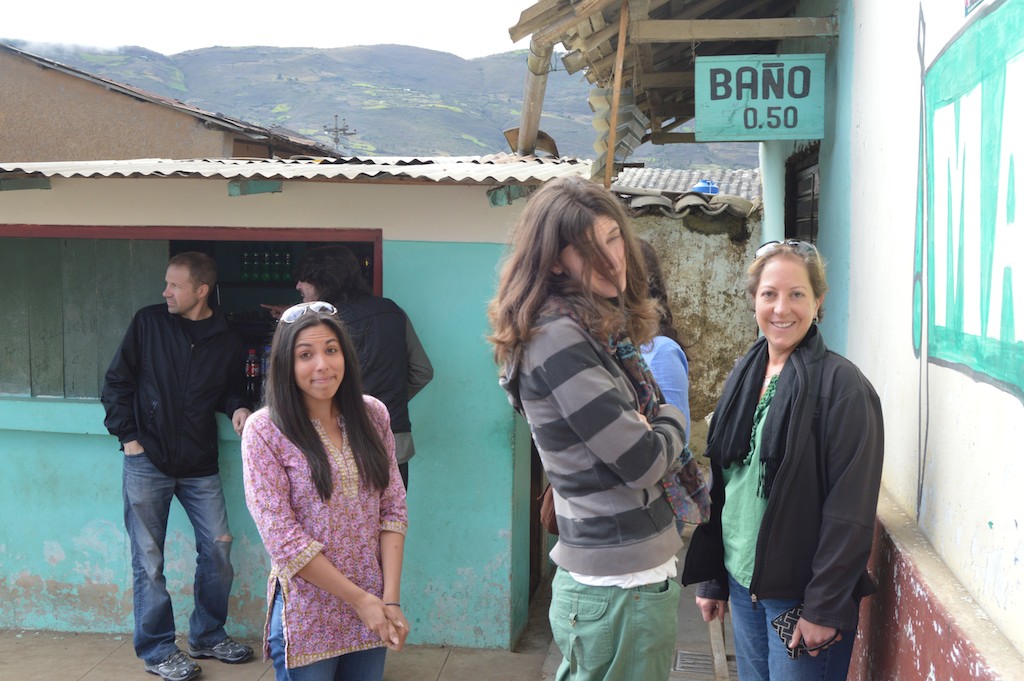
About 45 minutes into the dirt-road portion of our drive, we stop in the tiny hamlet of Choctamal for some liquid courage. I am not the only traveler fearing the roads, just the most vocal. The proprietresses could not be nicer and the 3 year old is a sweetie. The ladies laugh at me when I confide that I am petrified of the road and reassure me the road is fine. But we are all disappointed when they tell us we have 45 minutes to go.


I am more relaxed after a few shots from a $2 bottle of rum. And then we hit a rock road block. Just a pile of medium sized rocks in a line across the road right before a curve. Fearing thieves, a few of the guys get out of the van to remove the rocks while the rest of us keep watch. We round the curve and confront a large mound of rocks blocking the road. Now more concerned, the men get out and Miguel asks two passing kids what is going on. The kids say it is a prank by some other kids and help remove the rocks. We give them some coins for their efforts as we had passed them on the road and don’t think they did it. We pass a few more small towns and the reward is in sight: Kuelap.


Kuelap is amazing – it is exactly the place I would have loved to play in as a child. Within the terraced site are 420 circular, 1 square and 4 rectangular buildings. Houses, trees, paths, the view, the mystery…for me, a big part Kuelap’s charm is its unanswerable questions. Why was it built? While originally considered a fortress, due to its mountaintop location, walled perimeter (60 feet high in parts) and three, narrow entrances, it is now generally considered to be a residential complex, but no one knows why the walls exist. How did they make it? Getting those huge rocks to the top of a mountain was no easy feat. Who made it and when? It is believed to be constructed in several phases, beginning in the 6th century and ending several hundred years later, by the Chachapoyas, the Cloud People, but no one is really sure from where the Chachapoyas originated. Instead of pondering these questions too much, we just wander about and enjoy the experience.
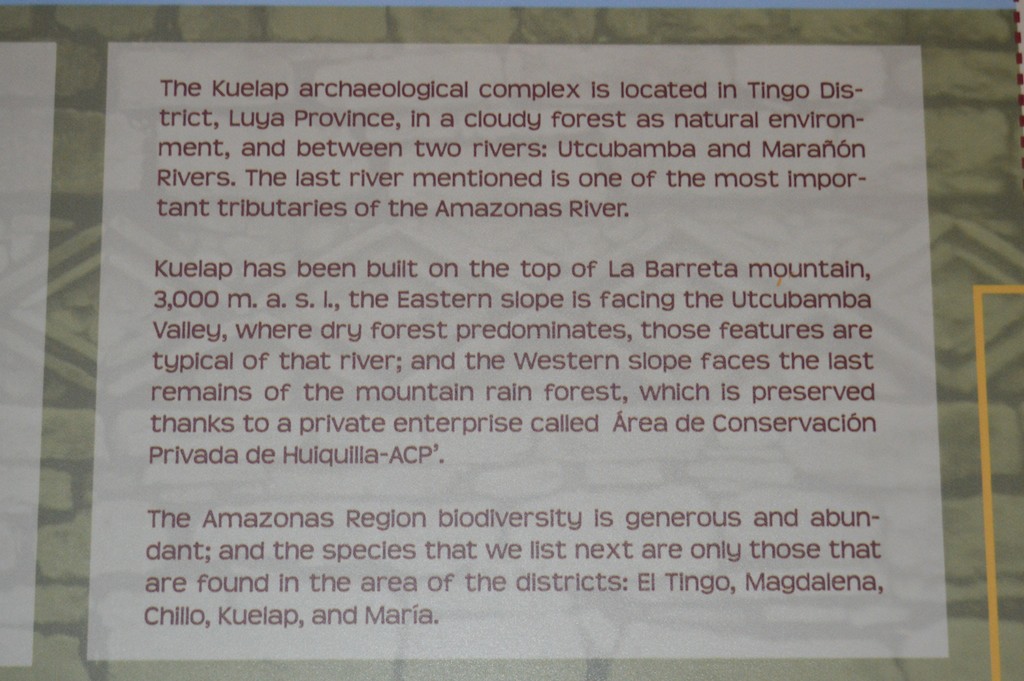
If you want to learn more about where Kuelap is situated, read this description from the visitor center. Or just skip to the pictures.
Kuelap summary
The ride back seems less terrifying, but as I want to be off the dirt road before dark, we don’t stop to visit our friends in Choctamal although they wave to us as we pass. We also encounter two more rock road blocks and as we arrive at the second one, two young guys on a motorcycle ride up behind us. They converse the entire time our party removes the rocks and we are not sure whether they intended to rob us and decide we outnumber them or the fact that we didn’t leave our van unattended and two of us are staring at them while the others move the rocks deters them. Regardless of whether they were the culprits, the experience increases our desire to get back to the Lodge to relax. We enjoy a nice dinner and then sit outside and star gaze. I see 5 shooting stars and, of course, use all my wishes for a safe journey back to Cajamarca!
Next: The Fantastic Hike to Gocta Falls




 Kerry On!